Bird
Penelope purpurascens
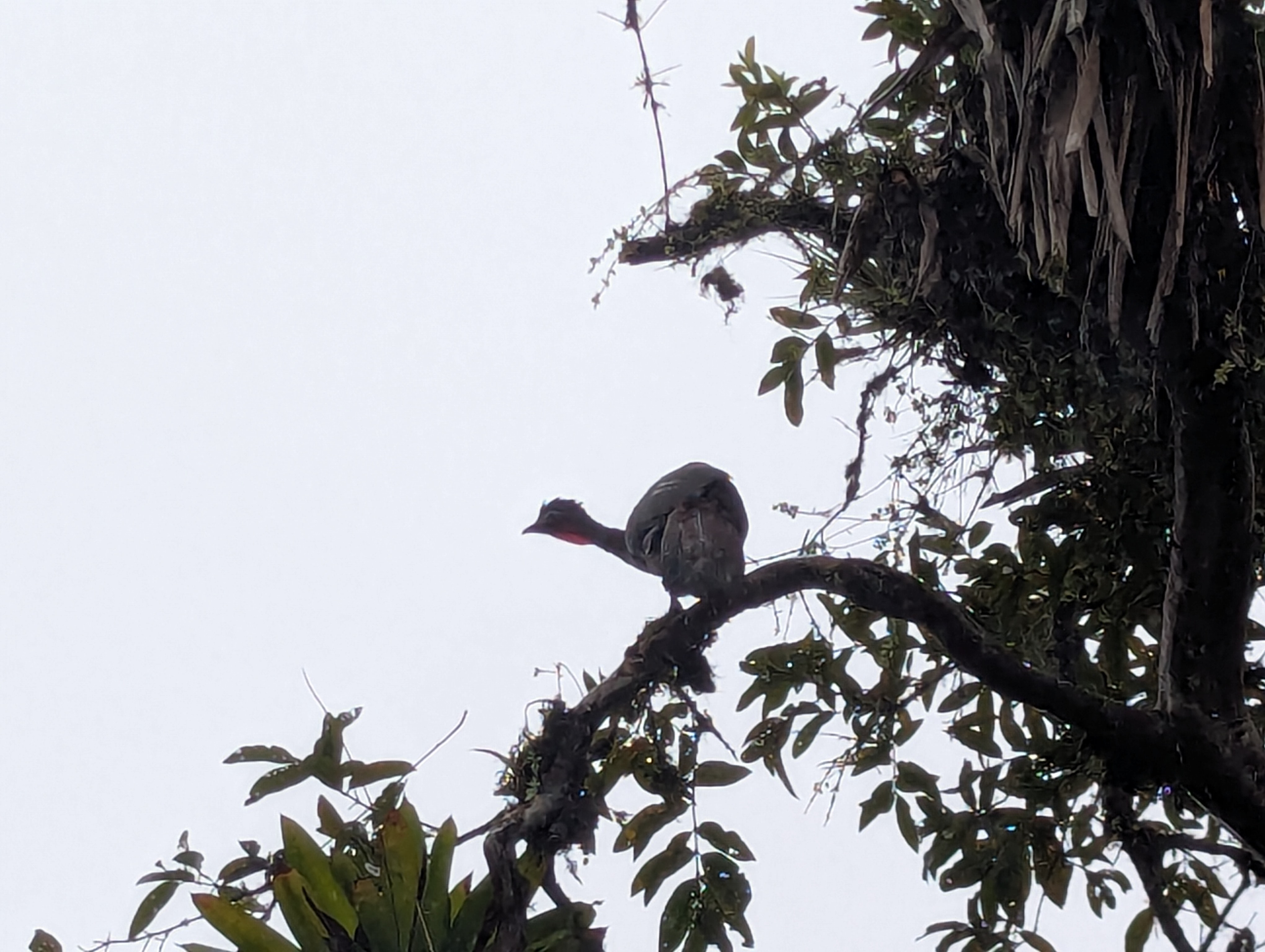
Crested Guan
Biological Facts
Lifespan
Approximately 15–20 years in the wild, potentially longer in protected environments.
Ecological Role
Crucial seed disperser for large-seeded forest trees. By digesting the pulp and excreting seeds intact, they facilitate forest regeneration.
Folklore/Local Stories
Often called 'the voice of the morning,' indigenous Chachi and Tsachila groups consider them indicators of forest health and a prime source of protein in traditional diets.
Diet
Frugivorous; prefers fleshy fruits (figs, palms, wild papayas), but also consumes leaves, flowers, and occasionally insects.
Conservation Status
Currently listed as Near Threatened by the IUCN due to intensive hunting and habitat loss throughout its range.
Complex Behaviors
Known for 'wing-drumming' displays at dawn where they fly with a loud whirring sound. They are highly vocal and social, often seen in pairs or family groups.
Size/Weight/Wingspan
Length: 76–92 cm; Weight: 1.6–2.4 kg. It has a broad tail and a wingspan of approximately 1 meter.
Habitat
Humid lowland and montane evergreen forests, including cloud forests like those in Mindo, ranging from sea level to 2,500 meters.
About this Species
The Crested Guan (Penelope purpurascens) is a prominent, turkey-like arboreal bird found in the humid forests of the Neotropics, including the Chocó Andino region of Mindo. It is characterized by its dusky olive-brown plumage with greenish iridescence, a bushy crest on its head, and a distinctive bright red dewlap or wattle hanging from its throat.
These birds are primarily canopy dwellers, moving gracefully through the trees in search of fruit. As significant frugivores, they play a crucial role in the ecosystem as seed dispersers for many primary forest tree species. They are well known for their loud, honking calls and a unique "wing-drumming" display performed at dawn to mark their territory.
Sightings Map
1 recorded observations